How much fence do you need?
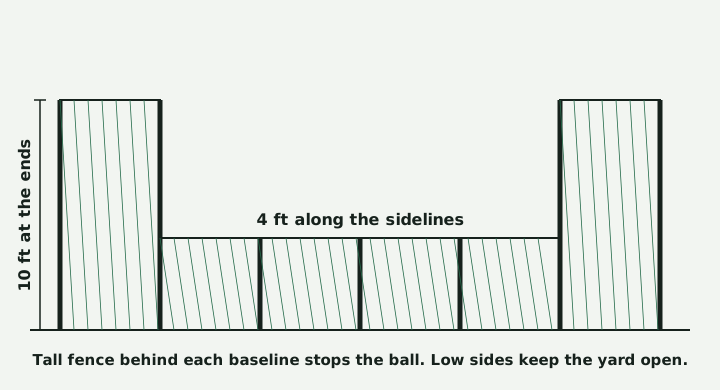
Pickleballs are light and do not travel like tennis balls. A full 10-foot cage is more than most backyards require.
- Ends only. Ten-foot fence behind each baseline, wrapping the corners by about 10 feet. Stops most balls. The least expensive real option.
- Ends tall, sides low. Ten feet at the ends, four feet along the sidelines. The most popular layout. The yard still feels open from the patio.
- Full height all around. For courts next to a pool, a pond, a steep drop or a neighbor who is tired of returning balls.
Materials
Black or green vinyl-coated chain link is the standard. It disappears visually better than galvanized and does not rust where the coating stays intact. For pickleball, ask for a smaller mesh, 1.75 inch instead of the usual 2 inch, so balls do not wedge in the diamonds.
Posts are 2.5 to 3 inch steel, set in concrete. A top rail and a bottom rail or tension wire keep the fabric from bellying out.
Windscreen: think before you add it
Oklahoma City is one of the windiest large cities in the country, with a steady south wind most of the year. Windscreen makes play better. It also turns a fence into a sail. A 10-foot fence with solid screen on it sees several times the wind load of bare chain link.
So if screen is in the plan, the fence is built for it from the start: heavier posts, closer spacing, and footings 3 feet deep or more. Screen should be the vented type and attached with ties designed to break away before the posts bend. Adding screen later to a fence that was not built for it is how fences end up leaning by June.
Where it helps most: the south end, to knock down the prevailing wind, and the west side if you play into the evening sun.
Gates
One 4-foot gate is enough for a backyard. Put it near a corner, not behind the middle of a baseline. If the court will ever need a resurfacing crew or a skid steer inside, a second gate or a removable panel 6 feet wide saves cutting the fence later.
Rules that affect court fences
Ten feet is taller than a normal residential fence. Oklahoma City issues fence permits through its Development Services department, and Edmond, Norman, Moore and Yukon each have their own height rules. HOAs often have stricter ones. A court enclosure set well inside the lot is treated differently from a boundary fence in some places and identically in others. We check before quoting. See permits and HOA approval.
Cost
| Fence | OKC range |
|---|---|
| 10 ft vinyl-coated chain link | $35–$55 per linear foot |
| 4 ft vinyl-coated chain link | $18–$28 per linear foot |
| Typical court: tall ends, low sides, one gate | $6,000–$10,000 |
| Vented windscreen, installed | $3–$5 per square foot |
Fence posts are set during the slab's cure period, either in the slab edge or just outside it. The order of operations is on the pickleball court construction page.
Questions homeowners ask
Do I need a fence around a backyard pickleball court?
No, but you will chase a lot of balls without one. At minimum, fence the two ends.
How tall should a pickleball court fence be?
Ten feet behind the baselines is standard. Eight works if a city or HOA limits height. Sidelines can be as low as four feet.
Will a court fence survive Oklahoma storms?
Bare chain link handles wind well because air passes through. Problems come from solid windscreen on a fence that was not built for the load.