What an acrylic court surface is made of
It goes on in layers, each one squeegeed across the slab and left to dry.
- Primer. On new concrete, after an acid etch, so the acrylic bonds.
- Resurfacer. Black acrylic loaded with sand. One or two coats fill the broom texture and make a uniform base.
- Cushion (optional). Three to five coats of acrylic with rubber granules. Softer underfoot.
- Color. Two coats of pigmented acrylic with fine silica sand. This is the playing surface.
- Lines. Taped, sealed so the edges stay crisp, then painted white.
All of it needs a dry slab and air temperature of 50 degrees and rising. That is why new courts poured late in the fall often wait until spring for color. The full build sequence is on the pickleball court construction page.
Texture: the part nobody thinks about
The sand in the color coat sets how the ball and your shoes behave. More sand means more grip and a slower, higher bounce. Less sand is faster and wears shoes less. Pickleball courts use a finer, lighter sand load than tennis courts. If the court will also see basketball, we go a touch smoother so it does not shred the ball.
Color and heat
This is the Oklahoma question. On a clear July afternoon, a dark green or dark blue court can run 30 to 40 degrees hotter than the air. Lighter shades of the same colors make a difference you can feel through your shoes.
| Color family | Heat | Ball visibility |
|---|---|---|
| Light blue, light green | Coolest | Good with a yellow ball |
| Medium blue, forest green | Warm | Best contrast. The classic pairing. |
| Gray, tan, sandstone | Cool to moderate | Fair. Hides red dirt well. |
| Dark blue, dark green, maroon | Hottest | Very good, but you pay for it at 4 p.m. |
A practical note on dust: wind carries fine red dirt across the whole metro. On a bright blue court every film of it shows. Greens, tans and the terracotta shades hide it between cleanings.
Two-tone layouts
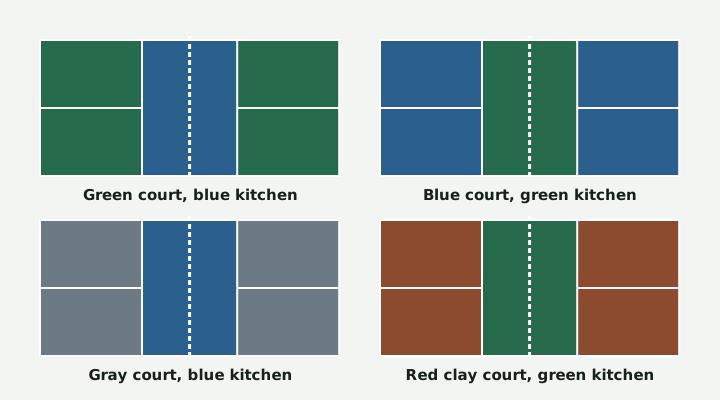
The common layout puts one color inside the lines, a second in the kitchen and a third (or a repeat of the first) on the surround. Contrast between the kitchen and the rest of the court helps players see the line they are not allowed to step over. Two colors cost a few hundred dollars more than one. Three costs a bit more again.
Cushioned surfaces
Rubber-filled cushion coats take some sting out of the slab. Players with knee or hip complaints notice it most. It adds $3,000 to $6,000 on a single court and plays slightly slower. It can be added at the first resurfacing if the budget is tight now.
Logos and extras
Family names, school logos and monograms can be stenciled into the surround. Keep them out of the playing area, where painted patches play slicker than the sanded color.
Questions homeowners ask
What is the best color for a pickleball court in Oklahoma?
A medium or light blue court with a green kitchen, or the reverse, gives good ball contrast without the heat of dark shades. Tan or gray surrounds hide red dust.
How long before we can play on new acrylic?
Usually 24 to 48 hours after lines, depending on temperature and humidity.
Does the color fade?
Slowly. Expect noticeable chalking after five or six Oklahoma summers, which is about when grip is wearing down too.